
Throughout human history, we have witnessed many a score left unsettled between two protagonists. The pattern was usually much the same: protagonist A offends protagonist B, who, weeks, months or even years later, takes great satisfaction in getting even for the insult suffered. Just think of Alexandre Dumas and the Count of Monte Cristo, Muhammad Ali versus Ernie Terrell, or Ferruccio Lamborghini versus Enzo Ferrari. And then there was the Golden Pony and the Tour de Provence. But let’s not get ahead of ourselves. One thing at a time …
My passion for pre-war motorcycles began a little over ten years ago, after an extremely rare sports machine from the Belgian manufacturer Saroléa came my way. At the time, I was also looking for a new two-wheeled challenge. The custom-bike scene and the associated trips to the vehicle inspection authorities with modified motorcycles were gradually giving me gallstones. So the slightly eccentric world of pre-war motorcycles, with its grey-haired mechanical wizards and incredible roadside repairs involving empty Coke cans, locking pliers, cable ties and whatever else a roadside ditch might have to offer, came along at just the right time.
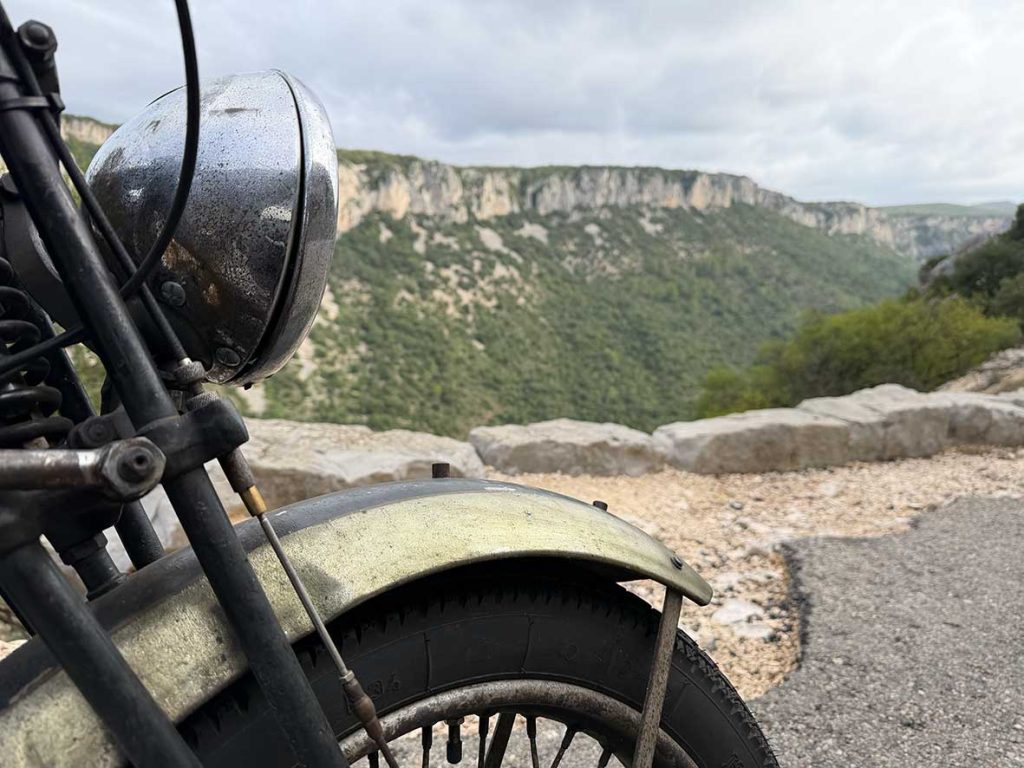
As the number of pre-war machines in my garage grew, so did my circle of like-minded friends, and the first multi-day trips abroad soon followed. The Tour de Provence in the south of France kept cropping up in conversation, and before I knew it, my name was on the entry list. They say that every now and then in life you should jump in at the deep end, stop overthinking things and simply get on with it, right? The only problem was that I didn't actually have a suitable motorcycle for the tour in my garage. The Saroléa was simply too rare and prestigious for me to subject it to five days of bumpy country roads and mountain passes that would take a serious toll on the machinery. So, at short notice – six weeks before the tour, to be precise – a new bike joined the stable: a 1935 Gillet Herstal 400 L.
Admittedly, taking an almost untested 90-year-old motorcycle on such an ordeal may not have been the wisest decision. But as the saying goes: ignorance is the art of refusing to see what is right in front of your eyes. And what was that about jumping in at the deep end …?
New tyres, a new chain, a few other adjustments and several test rides close to home would have to be enough to prepare the Golden Pony for its big adventure. A few boozy evenings with friends around the charcoal grill had quickly earned the little Gillet its name – despite its golden colour being entirely unintended.
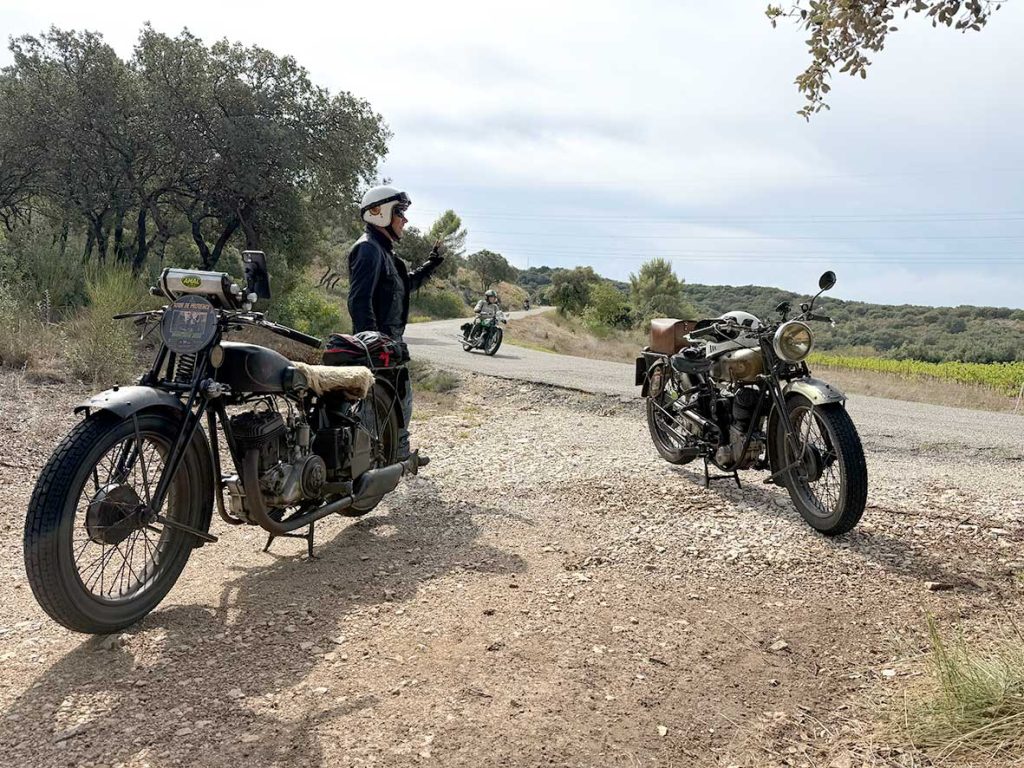
But events unfolded exactly as they had to. The steep climbs of the Vercors took their toll, and on the second day of the tour, the little Belgian side-valve engine breathed its last at the roadside on a steep ascent. The relentless climbs, temperatures well above 40°C and, last but not least, the fact that I had forgotten to open the engine's oil tap on the second morning meant that, for the remaining three days of the tour, I waved everyone off at the start each morning, spent the day nursing my wounded pride, and then waved again in the evening as those who had managed to make it through the day under their own power returned. What a humiliation! The wound ran deep …
Fast-forward to 2026. By now, the Golden Pony had undergone a complete engine overhaul and, over the years and numerous rallies and regularity trials, had built up an impeccable reputation as a thoroughly reliable little horse. The deep wound left by the Tour de Provence had healed on the surface, but still caused considerable pain underneath. It was finally time to treat it properly. The thorn had to come out!
And so it came to pass that, on an early Wednesday morning in August 2026, the Golden Pony rode towards the rising southern French sun to take part in the 35th edition of the Tour de Provence, organised by the Moto Club Sénas Durance.
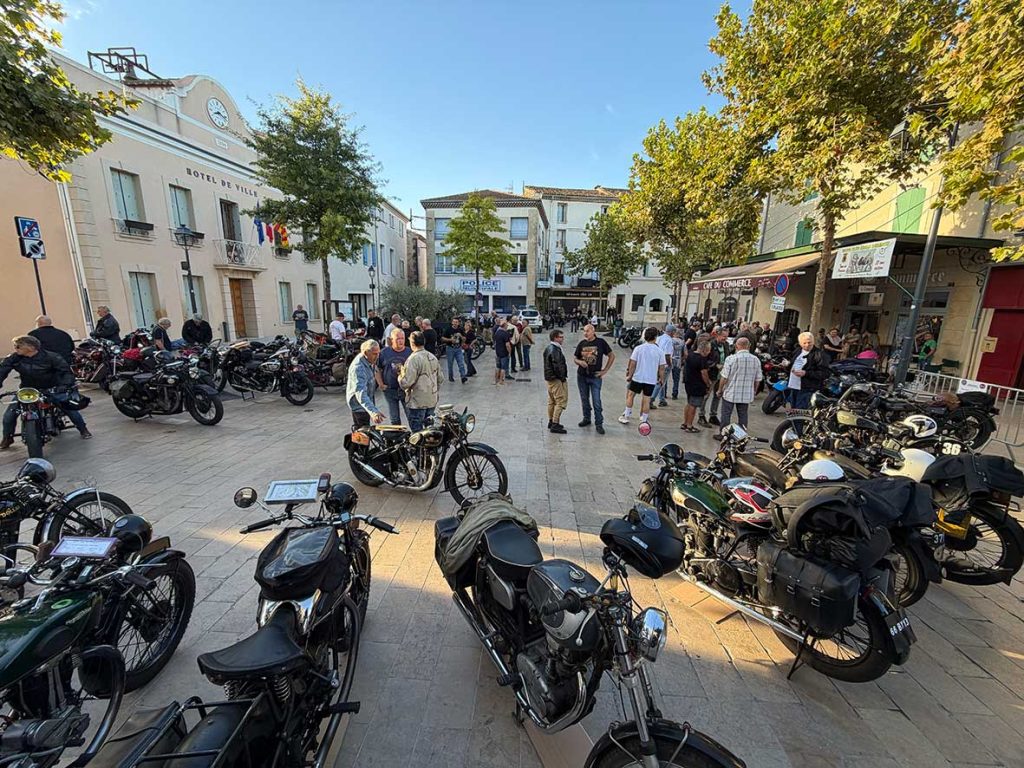
The first stage took us from the traditional starting point, the market square of the little town of Sénas, in the direction of the Ardèche. In glorious sunshine and temperatures of 30°C, the little Gillet Herstal galloped along 197 kilometres of winding roads towards Vallon-Pont-d’Arc, the place that would be home for the next four days to a hundred or so thoroughly motorcycle-obsessed enthusiasts.
Along the winding roads of the Gorges de l’Ardèche, past the famous Pont d’Arc, the little Belgian side-valver pressed on without missing a single spark. I had a smile on my face. A perfectly functioning 91-year-old motorcycle, beautiful roads, breathtaking views and a dozen friends around me, all sharing the same passion for motorcycles that seemed to have fallen out of another era. What more could a person want?
But hold on: the first day had gone smoothly last time, too. So keep your eyes on the prize!
Preparations for the second day suggested that the Golden Pony was doing splendidly. A quick routine check of all the important bolts, a small glass of engine oil topped up, the valve guides lubricated – and off we went for the second stage.
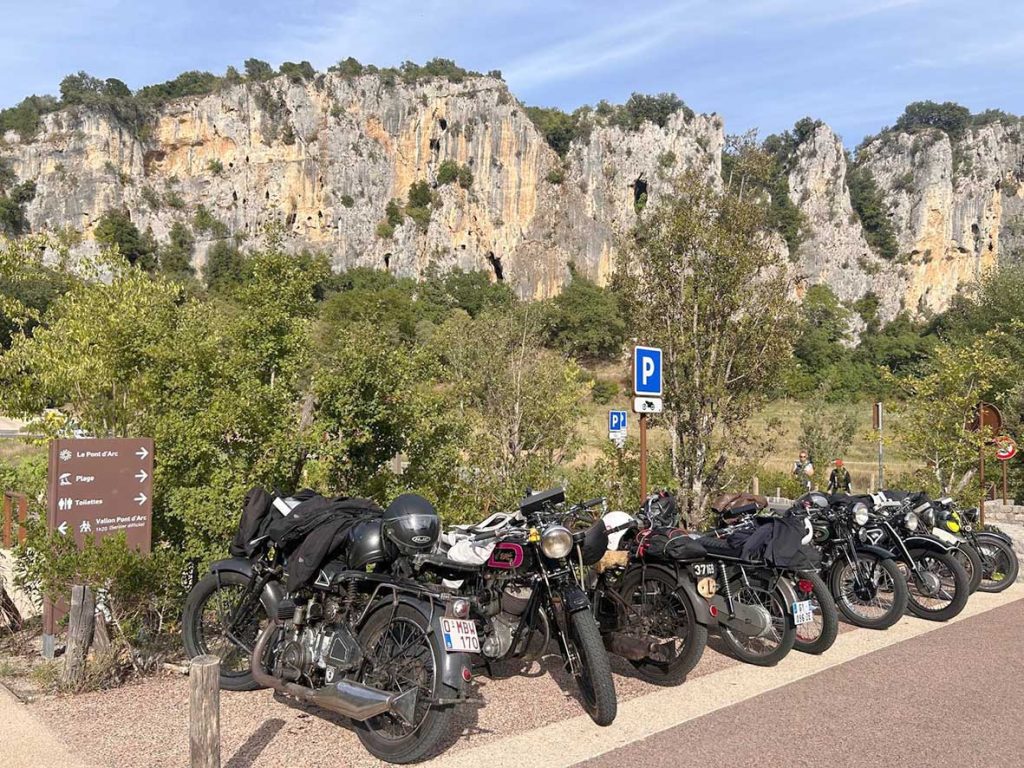
A slight misinterpretation of the GPX data meant that two Luxembourgers on their Gillet Herstal machines completed the day's 177 kilometres, but in the opposite direction to every other participant. Here's a pro tip: the Gorges de l’Ardèche are much quieter early in the morning, the viewpoints are deserted and you practically have the roads to yourself.
At the halfway lunch stop, we inevitably caught up with the rest of the participants and were greeted by rain suits and wet footwear. Could the gods of crankshafts and magneto ignition perhaps be holding a protective hand over the Golden Pony, its rider and his fellow travellers? In any case, my mate and I were the only ones on this year's Tour de Provence who didn't get a single drop of rain.
Day three. The queen stage. 233 kilometres heading north along the Route des Sucs. There were plenty of metres of elevation to conquer, and, as the icing on the cake, 137 kilometres without any opportunity to refuel. The Gillet's little nine-litre tank should be good for 150 kilometres. But would that still be the case when the puny 400cc side-valver was being pushed to its limits on all those mountain climbs?
So, once again, the morning ritual: top up with the obligatory splash of engine oil, lubricate the valve guides, check all the bolts and, just to be on the safe side, fill the two one-and-a-half-litre petrol bottles. The attentive Gillet rider had ordered them online in advance, specifically for this stage. This time, nothing was to be left to chance.
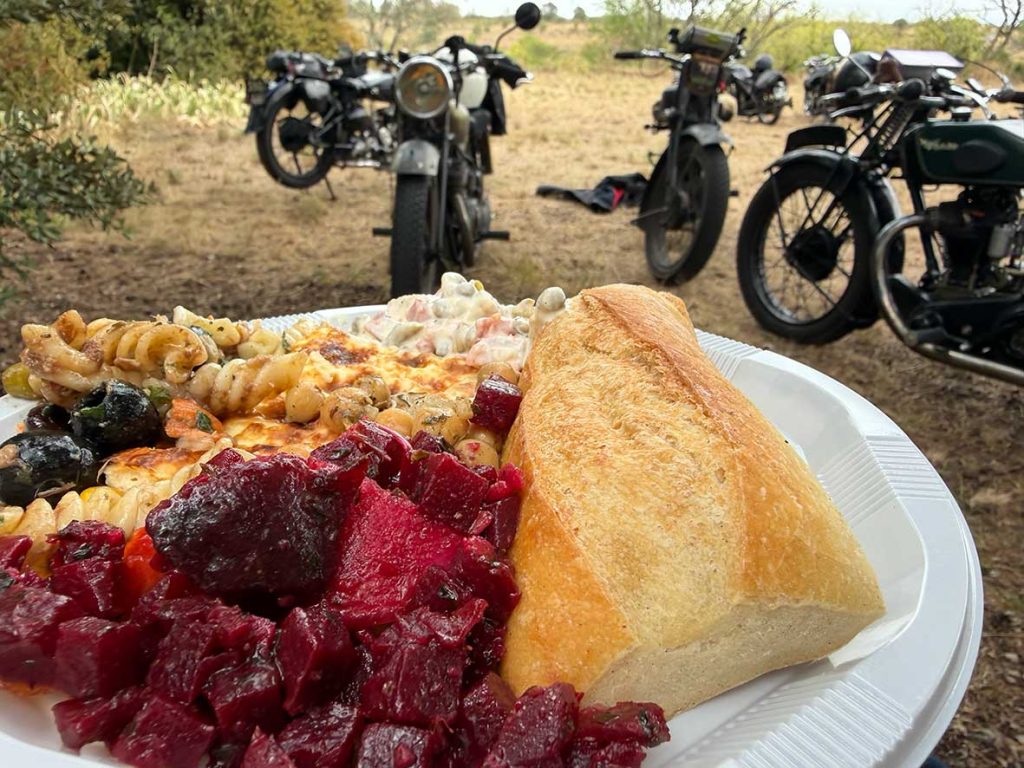
The ride to Lac de Saint-Martial, a picturesque mountain lake on whose shores the tour organisers had once again laid on a delicious regional lunch, was going to demand quite a lot from the Gillet Herstal.
But even the kilometres of uphill stretches, followed by false flats that looked perfectly level but could not fool a 91-year-old Belgian with equally venerable horsepower in its crankcase, and the thin air – none of it could faze the Golden Pony. The Gillet galloped bravely through breathtaking mountain scenery as if it had only just been assembled in Jeumont the day before.
That evening, a certain sense of calm was gradually settling over the rider, too. It was beginning to look as though we might actually pull it off this time.
Day four, and something rather strange happened. But first, let me explain.
When people ask whether I prefer riding my modern motorcycles or the old ones, I always say that the two simply cannot be compared. I ride my modern machines for the sheer pleasure of motorcycling: for the lean angles, the acceleration and, above all, that feeling that spreads through your mind when you think of nothing but the road and the machine. The one thing in life that allows me to switch off completely.
I ride the old machines, on the other hand, for the love of mechanics. For the long winter evenings and weekends spent in the workshop, elbow-deep in the innards of an old engine that is even older than my own parents. Bringing that engine back to life after getting to know every single bolt on a first-name basis. Wondering, while riding, what this motorcycle must have experienced over the years. Where was it when I was born? When mankind first travelled into space, or when the Berlin Wall came down? Fantastic!
That mental vacuum, however, that comes with riding modern motorcycles is simply not possible here. My thoughts are too often occupied by those very bolts I have come to know so well. Will they hold? Is that noise I've been hearing for the past few kilometres coming from the engine, or is it simply the exhaust of the rider in front of me? Switching off mentally is out of the question.
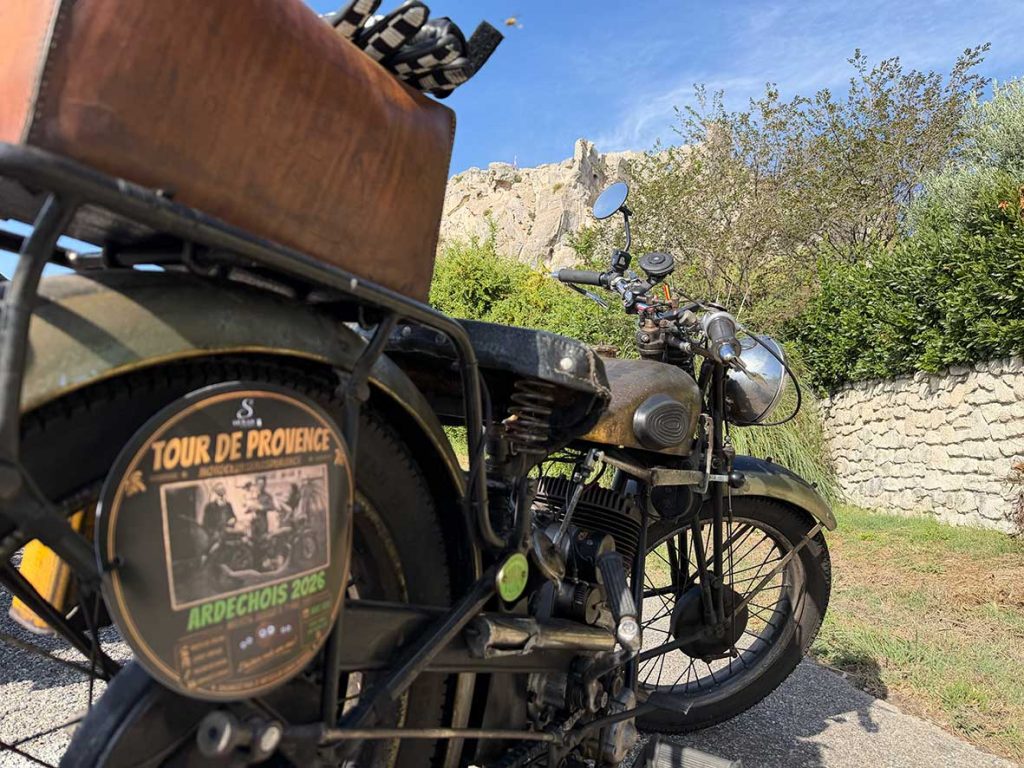
But on this fourth day of the Tour de Provence, that is exactly what happened. For the very first time on one of my old heaps, I experienced that complete mental switch-off, that almost trance-like state of riding a motorcycle. The Gillet was running like clockwork. Nothing could stop the two of us.
The route covered more than 209 kilometres through the Parc naturel régional des Monts d’Ardèche and the Grand Tanargue nature reserve. Right from the start, there were seemingly endless uphill stretches where every badly judged corner and every less-than-perfect shift through the hand-operated four-speed gearbox could mean the difference between victory and defeat in the battle against the gradient. These days, in MotoGP, the difference is measured in tenths or hundredths of a second. In our oil-soaked pre-war world, it's four or five kilometres per hour.
The long descent to Château de Castanet on Lac de Villefort was to put the Golden Pony and its rider to one final test. For almost an hour, we rattled down towards the lunch stop along bumpy tracks littered with potholes and loose gravel. There was banging and groaning from every corner, both on the motorcycle and from its rider.
But the little Gillet endured this ordeal without complaint, too. The rider, on the other hand, had to treat his aches and pains that evening with an extra apéritif.
And so it came to pass that, during the final 100 kilometres of the day's stage, that feeling I mentioned earlier finally settled in my head and deep in my stomach. That octane-induced trance that makes life worth living. Could these possibly be the best 100 kilometres on two wheels of my entire life?
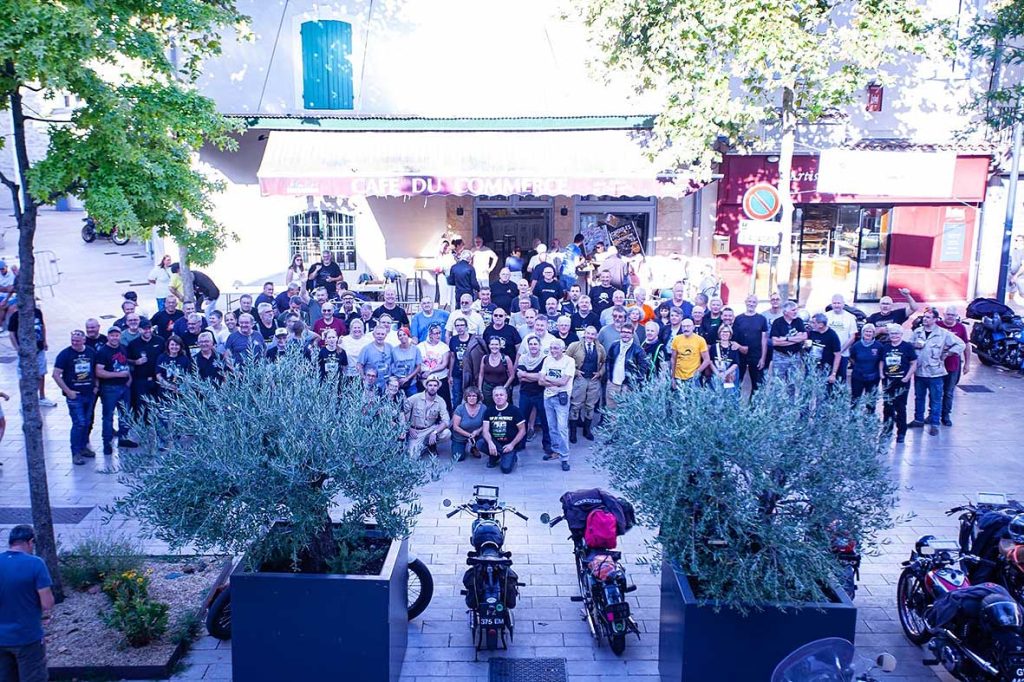
The fifth and final stage took us over 147 kilometres out of the Ardèche and back towards Sénas, the little town that has served as the start and finish point of the fantastic Tour de Provence for 35 years. The stage was a breeze. Over the past five days and 1,100 kilometres, the Golden Pony had performed as though it could lead a cavalry of hundreds of warhorses – well, at least up to 70 km/h.
After that first Tour de Provence, where I had asked the little Gillet Herstal to take on a challenge it simply couldn't manage – through no fault of its own, since my own stupidity was really to blame – I had sworn to return just once more to settle the score.
Today, however, I can hardly wait to take part again.
My thanks go to the organisers of the Moto Club Sénas Durance and to all those friends who helped me turn my 400 L into such a reliable 91-year-old motorcycle.
Why the name Golden Pony?
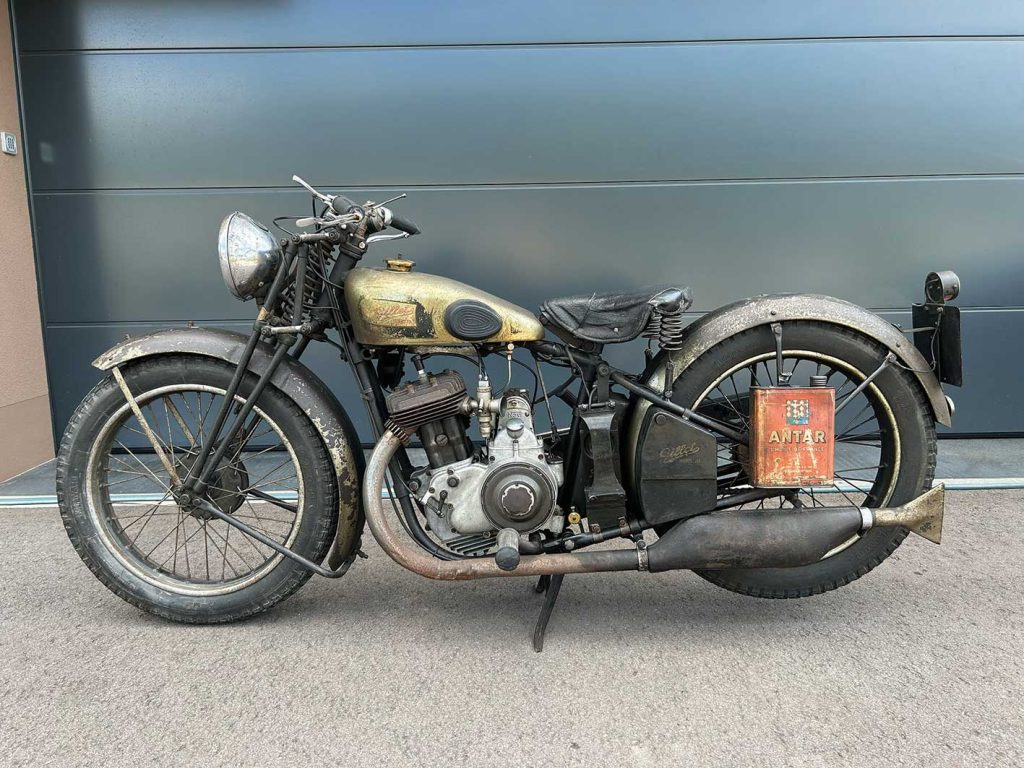
The Golden Pony is a 400cc side-valve motorcycle producing around 15 hp, manufactured by the Belgian marque Gillet Herstal (not to be confused with the French manufacturer René Gillet). From 1919 to 1959, Gillet Herstal produced motorcycles of all kinds in Herstal, Belgium – ranging from the two-strokeTour du Monde, which, as its name suggests, travelled around the world in the 1920s, to successful Grand Prix racing machines.
This 1935 400 L has the distinction of being what is known as a “Gerkinet-Gillet”. These machines were assembled in Jeumont, France, in the mid-1930s. To avoid high import duties, Gillet Herstal had acquired the French company Gerkinet, where complete motorcycles were assembled from imported Belgian components. Distinctive features of these machines included a chrome-plated fuel tank and chrome-plated mudguards.
More than eight decades later, this very detail would earn the 400 L its affectionate nickname. After all, chrome can start to peel over the years. At some point, the elderly previous owner had simply had enough of cutting his fingers on the sharp edges of the flaking chrome. So he generously coated the tank, rims and mudguards with clear lacquer. Over the years, however, exposure to sunlight caused the lacquer to take on a yellowish hue, leaving the Gillet Herstal today dressed in a golden coat.
More pictures from the tour in the gallery below:
